1. Flush the tank — annually
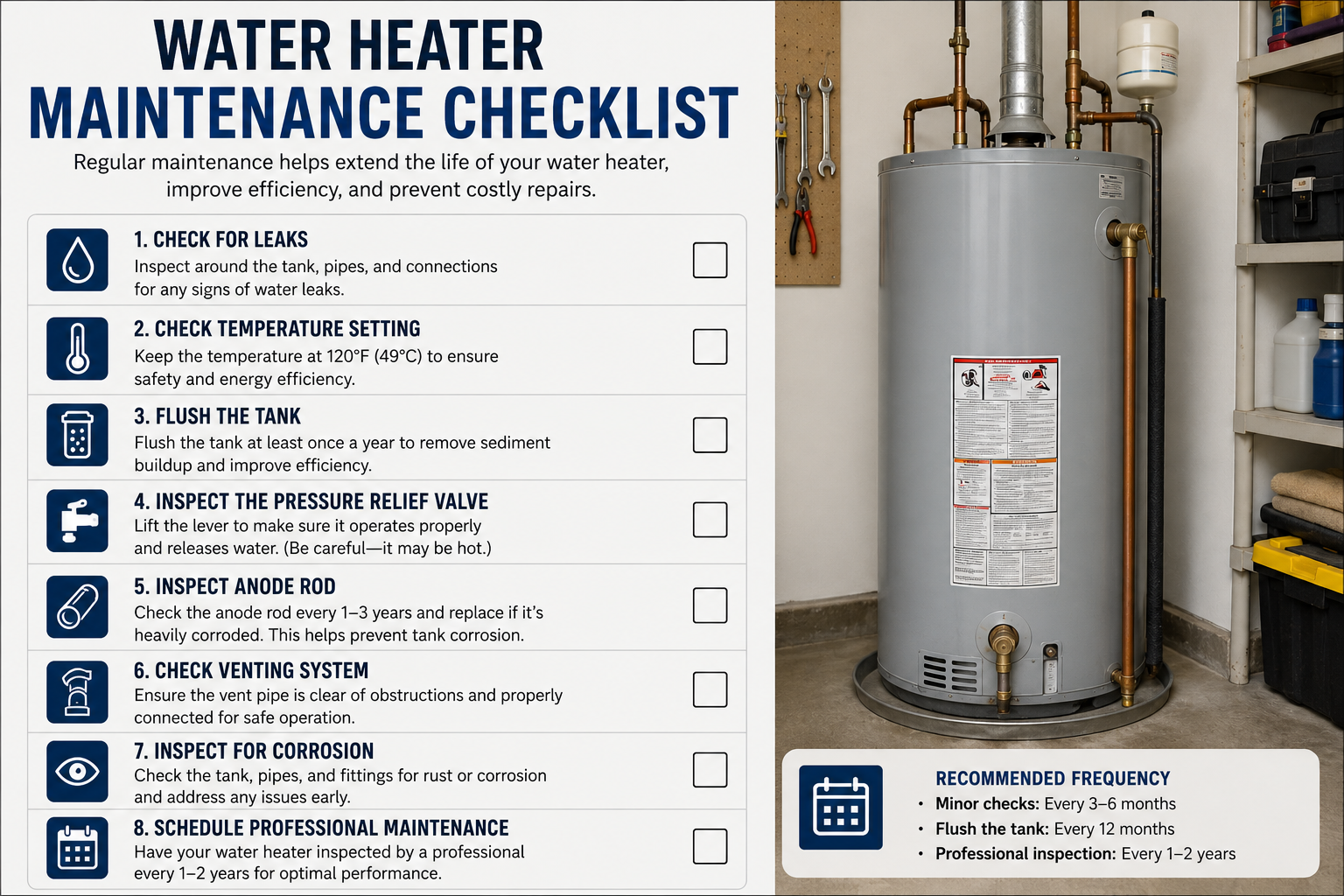
Draining the tank and flushing it clears out sediment that settles at the bottom over time. Left alone, that sediment insulates the water from the heating element or burner, forcing the unit to work harder, and it's the leading cause of the popping and rumbling noises homeowners notice. Homes with harder water may benefit from flushing every 6 to 9 months instead of annually.
2. Check the anode rod — every 2 to 3 years
The anode rod is a sacrificial metal rod designed to corrode instead of the tank itself. Once it's significantly depleted, the tank becomes the next thing exposed to corrosive minerals in the water. Checking it every couple of years, or sooner if you're already seeing rusty hot water, is one of the more effective ways to extend a tank's working life.
3. Test the pressure-relief valve — annually
The temperature and pressure-relief valve, usually called the TPR valve, exists to release water if pressure or temperature inside the tank climbs to a dangerous level. Testing it means briefly lifting the test lever to confirm it opens and closes properly. A valve that doesn't respond, or that keeps dripping afterward, needs to be replaced rather than ignored.
4. Check the temperature setting — annually
120°F is a commonly recommended setting for most households. It's hot enough for typical use while reducing scald risk and limiting standby heat loss and mineral buildup compared to higher settings. It's worth confirming the setting hasn't drifted, especially after any recent service work on the unit.
5. Inspect for leaks and corrosion — every few months
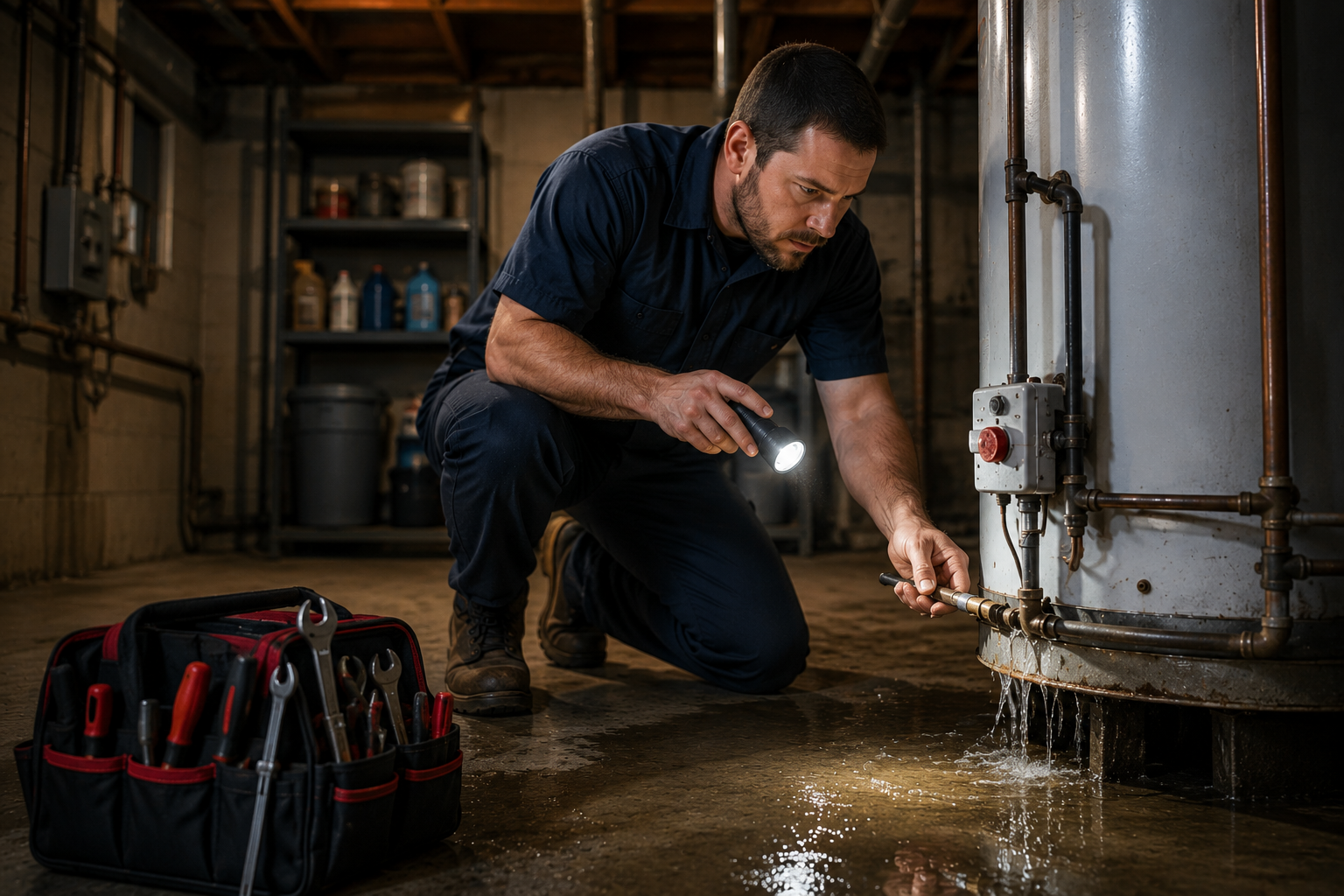
A quick visual check around the base of the unit, the fittings, and the drain valve takes only a minute and can catch a small issue, like a loose fitting, before it becomes standing water on the floor. Look for rust streaks, damp spots, or mineral buildup around connections.
6. Descale a tankless unit — annually
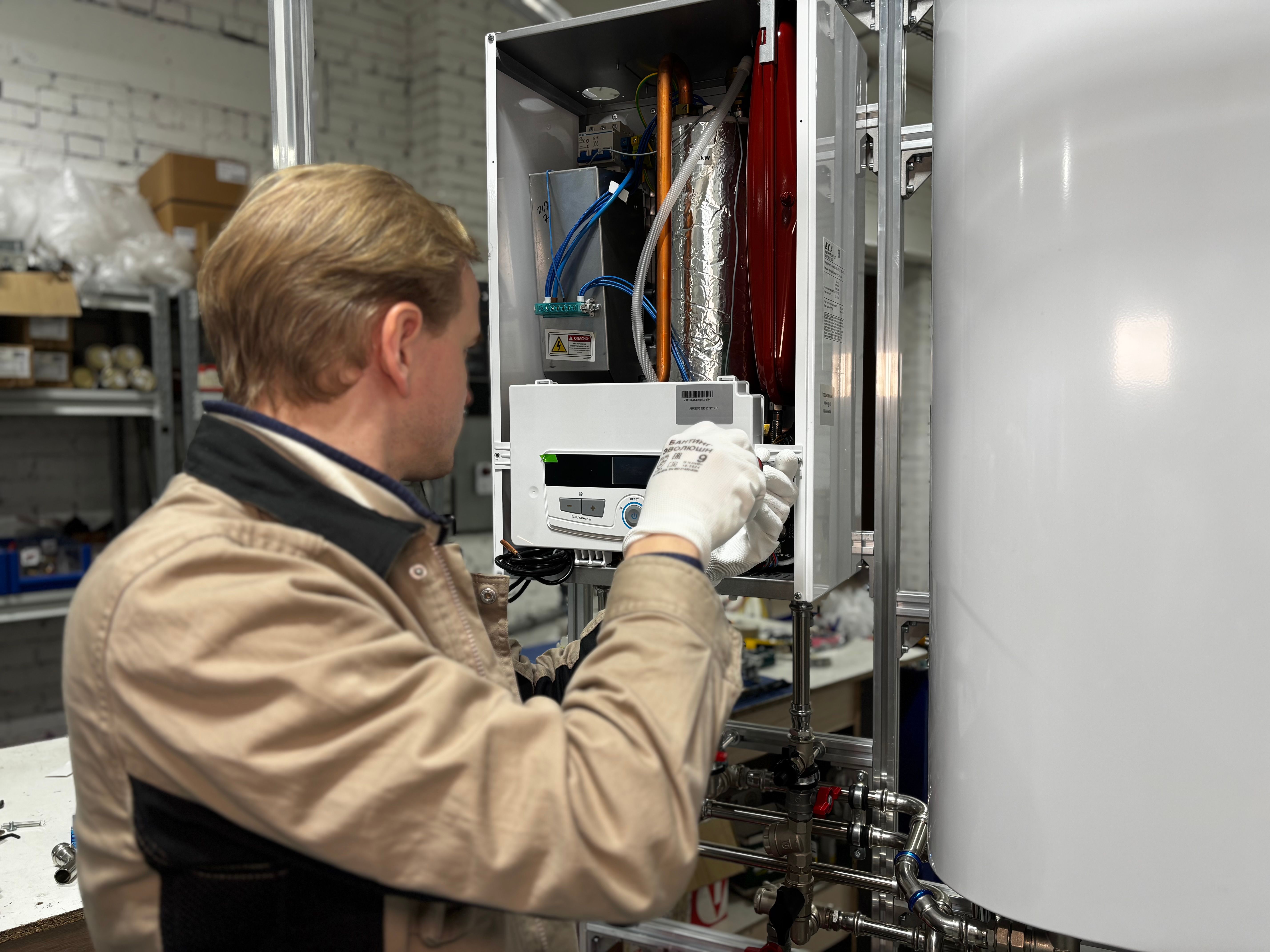
Tankless water heaters don't hold standing water, so they don't need sediment flushing, but mineral scale still builds up on the heat exchanger over time. Descaling clears that buildup and is one of the most effective ways to prevent the error codes and temperature fluctuations that come with a scaled-up unit.