(513) 810-5367

Water Heater Guide

7 Signs Your Water Heater Needs Repair

Most water heater failures don't happen without warning. Here's what to watch for, what each sign usually means, and how to tell whether it's a simple fix or something more serious — before you're left with a cold shower.

  • Same-Day Diagnostic Visits
  • Honest, Upfront Pricing
  • Serving Cincinnati & Northern Kentucky
Professional Service
Same-Day Service
Gas • Electric • Tankless
Residential & Commercial
Emergency Service
Upfront Pricing

The Warning Signs

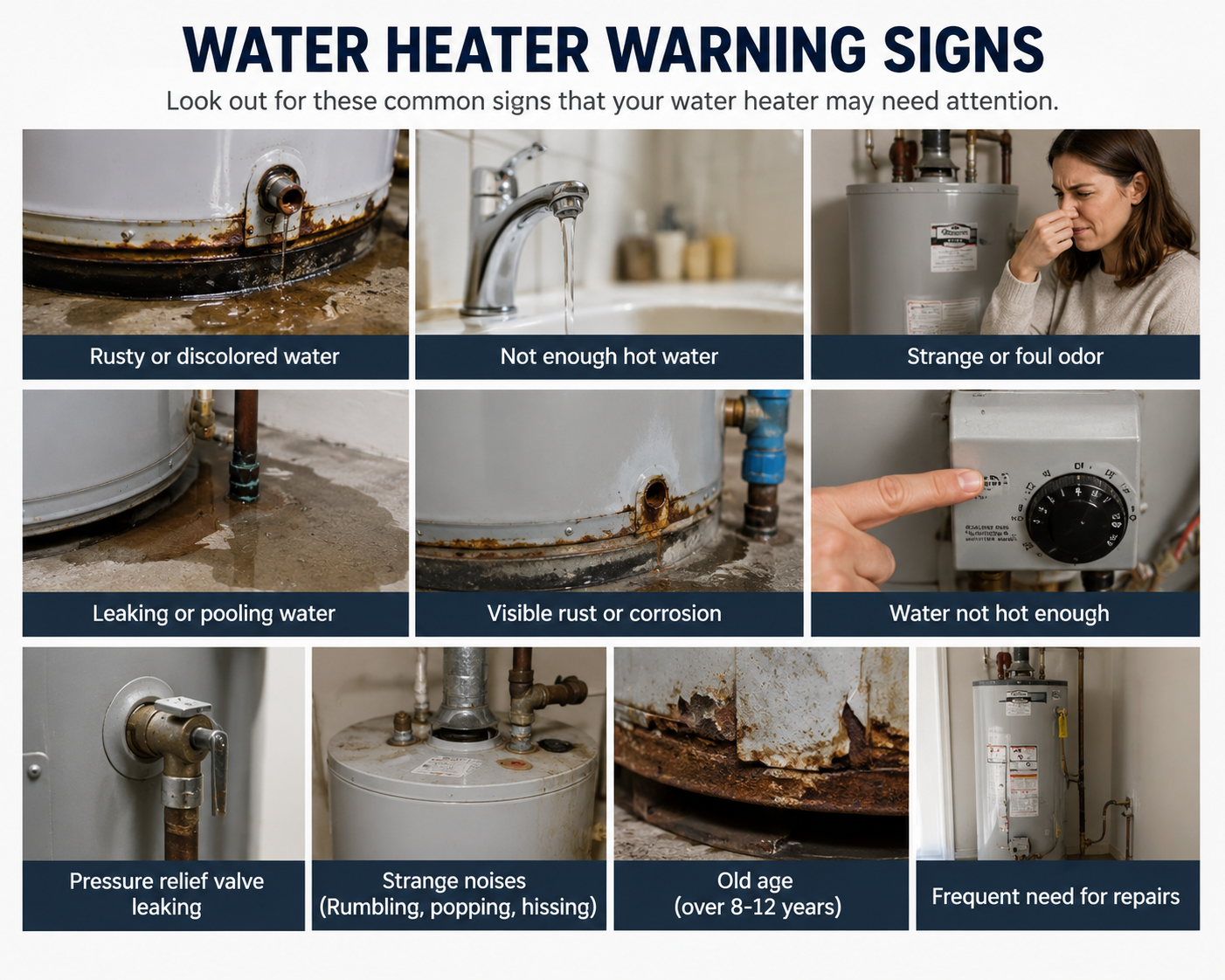
Seven signs your water heater needs repair

Some of these are minor and easy to live with for a while. Others should be addressed right away. Here's how to tell the difference.

1. No hot water, or not enough of it

This is the most obvious sign, and usually the one that finally prompts a call. On a gas water heater, a total loss of hot water is often traced to a pilot light that's gone out or a failed thermocouple, which is the small safety sensor that keeps the gas valve open. On an electric unit, it's more often a blown upper heating element or a tripped high-limit switch. If you're only running out of hot water faster than you used to rather than losing it entirely, that's usually a sign of sediment buildup reducing the tank's effective capacity, or a failing lower element that isn't finishing the job.

2. Rusty, brown, or discolored hot water

Discolored water coming specifically from the hot tap, and not the cold, usually points to the tank rather than the plumbing. The most common cause is a worn-out anode rod. This sacrificial rod is designed to corrode instead of the tank, and once it's used up, the tank itself starts to rust from the inside. Caught early, replacing the anode rod is a straightforward fix. Left alone, it can lead to actual tank corrosion, which isn't repairable and generally means replacement.

3. Popping, rumbling, or banging noises

A water heater that's suddenly noisier than it used to be is almost always dealing with sediment. Minerals in the water settle at the bottom of the tank over time, and as the burner or heating element heats the water underneath that layer, small pockets of steam form and collapse, creating the popping or rumbling sound. It's not dangerous in the short term, but it does mean the unit is working harder than it should be, and a tank flush usually resolves it.

4. Water pooling around the base of the unit

Any standing water near a water heater deserves a closer look. Sometimes it's something simple, like a loose drain valve or a fitting that's worked itself loose over time. Other times it's condensation from a nearby AC line or a cold snap. But if the leak is coming from the tank itself, it means the inner tank has cracked or corroded through, and that's not something that gets patched — it means the unit needs to be replaced. Because it's not always obvious which of these is happening, an active leak is worth treating as a same-day issue rather than something to watch.

5. Inconsistent or fluctuating water temperature

Water that runs hot, then lukewarm, then hot again in the same shower usually means a component isn't doing its job consistently. On a tank unit, that's often a failing thermostat or a heating element on its way out. On a tankless unit, it's more often a flow sensor issue or mineral scale building up on the heat exchanger and restricting how evenly the unit can heat water on demand. Either way, this kind of inconsistency tends to get worse rather than resolve on its own.

6. A pilot light that won't stay lit, or an error code

On gas units, a pilot that keeps going out usually points to a failing thermocouple, a draft issue, or a dirty pilot assembly. On tankless units, most modern models display an error code when something's wrong, whether that's a flame sensor issue, a flow problem, or a venting fault. These codes are genuinely useful for diagnosis, so if your unit displays one, it's worth writing it down before calling for service — it can speed up the visit considerably.

7. The smell of gas near the unit

This is the one sign that should never wait. A gas odor near a water heater, faint or strong, should be treated as an emergency. If you smell gas, don't operate switches or open flames near the unit, shut off the gas supply at the valve if you can reach it safely, ventilate the area, and call for emergency service immediately. This is the one item on this list where the right move is to act first and ask questions later.
Behind the Symptoms

What's usually driving these problems

Almost every symptom above traces back to one of a handful of underlying causes. Understanding them makes it easier to know what you're dealing with.

01

Sediment buildup

Minerals in tap water settle at the bottom of the tank over time. It's the leading cause of noise, reduced efficiency, and a shorter effective hot water supply, and it's largely preventable with periodic maintenance.

02

Anode rod wear

This sacrificial rod protects the tank from corrosion by corroding first. Once it's depleted, the tank itself becomes the next thing exposed to corrosive minerals in the water.

03

Aging components

Thermocouples, heating elements, thermostats, and gas valves all have a working lifespan. Most repairs are simply about replacing whichever one has reached the end of its own.

04

Tank age itself

A standard tank water heater typically lasts somewhere in the range of 8 to 12 years. Past that point, the tank's own metal and seals become more likely to fail regardless of maintenance.

What Homeowners Should Do

Repair, replace, or wait it out?

Not every warning sign needs an immediate call. Here's a general way to think through it.

If it's a leak, gas smell, or total loss of hot water

What to do: Treat it as an emergency. Shut off the water supply to the unit if there's an active leak, and shut off the gas or power if you're comfortable doing so. Then call for service the same day. These are the situations where waiting tends to make the problem, and the cost, worse. Our emergency water heater repair service is built specifically for this kind of call.

If it's noise, discoloration, or minor temperature swings

What to do: These are worth scheduling a visit for soon, but they typically aren't an emergency. A technician can flush the tank, check the anode rod, and test the relevant components to catch the issue before it becomes something bigger. Regular water heater maintenance also helps prevent a lot of these symptoms from showing up in the first place.

If the unit is older and facing a second issue

What to do: This is where the repair-versus-replace conversation happens. As a general rule, a newer unit with one clear, isolated failure is usually worth repairing. A tank past 8 to 10 years old, or one that's already had a significant repair and is now showing another problem, often makes more financial sense to replace. Our water heater replacement page walks through what that process looks like, and a technician can give you real numbers for both options side by side.

Frequently Asked Questions

Common questions about water heater warning signs

For most homeowners, it's a change in hot water performance: it runs out faster than it used to, takes longer to heat back up, or comes out lukewarm instead of hot. These changes tend to show up gradually before a unit fails completely, so they're worth paying attention to rather than dismissing.

A little operational sound, like a soft flow of water or a faint hum, is normal. Popping, rumbling, cracking, or banging is not. Those sounds usually mean sediment has built up in the tank and is trapping water against the heating surface, and it's worth having the tank flushed before the noise gets worse.

It depends on the source, but any active leak deserves prompt attention. A loose fitting or valve is usually a simple fix. Water coming from the tank itself is more serious, since a tank does not get repaired once it's leaking — it gets replaced. Treat a leak you can't identify as an emergency and shut off the water and power or gas supply to the unit.

Rusty water itself is mostly a nuisance and a warning sign rather than a hazard, but it can stain fixtures, laundry, and plumbing fittings over time. The bigger concern is what it signals: an anode rod that's used up or a tank that's starting to corrode from the inside, both of which are worth checking before the situation worsens.

Yes. If you smell gas near a gas water heater, turn off the gas supply at the shutoff valve if it's safe to reach, avoid open flames or switches, ventilate the area, and call for emergency service right away. A gas smell should always be treated as urgent.

Age and history matter as much as the symptom itself. A newer unit with a single failed part, like a thermocouple or heating element, is usually worth repairing. A tank past 8 to 10 years old, or one that's already had a major repair, often makes more financial sense to replace, especially if the tank itself is the problem.

Some basic maintenance, like checking the temperature setting or clearing space around the unit, is reasonable for most homeowners. Anything involving the gas line, electrical connections, the pressure-relief valve, or opening the tank itself is best left to a professional, both for safety and because misdiagnosing the cause can lead to a repeat call.

This is often sediment buildup reducing the effective tank capacity, a failing lower heating element on an electric unit, or a household using more hot water than the unit was sized for. A technician can test the actual cause rather than guess at it.

Some overlap, like inconsistent temperature or reduced flow, but tankless units also display specific error codes and are more likely to show scale buildup on the heat exchanger than sediment in a tank. If you have a tankless unit acting up, our tankless water heater repair page covers those symptoms in more detail.

In most cases we can offer same-day service, and we prioritize active leaks, gas smells, and a total loss of hot water. Call or text us with what you're seeing and we'll let you know how soon we can get someone out.

Get a Free Estimate

Seeing one of these signs? Let's take a look.

No obligation, no pressure. If it's an active leak, a gas smell, or you have no hot water right now, skip the form and call — our emergency repair service gets you seen faster.

  • We respond during business hours as quickly as we can
  • Estimates are free and come with no commitment
  • Serving Cincinnati and Northern Kentucky
(513) 810-5367

By submitting, you agree to be contacted about your request. We don't sell your information.