(513) 810-5367

New Water Heater Installation — Cincinnati, OH

Water Heater Installation in Cincinnati, OH

Building an addition, finishing a basement, or setting up hot water in a space that's never had it before? We install gas, electric, and tankless water heaters across Cincinnati and Northern Kentucky, sized to your household and installed to code from the first connection.

  • Correct Sizing for Your Household
  • Code-Compliant Venting & Connections
  • Gas, Electric & Tankless
Professional Service
Same-Day Service
Gas • Electric • Tankless
Residential & Commercial
Emergency Service
Upfront Pricing

Is This the Right Service?

When you need a new water heater installation

Installation covers setting up hot water where there wasn't a working system before. Tap a scenario to see what it typically involves.

Building a new home

What's involved: Water heater installation is coordinated with the rest of the plumbing and electrical rough-in, so gas or electrical supply, venting, and water lines are planned into the build from the start.

Our approach: We size the unit to the finished home's expected occupancy and layout, and install to the same code standards required for final inspection and sign-off.

Adding a room, in-law suite, or second bathroom

What's involved: An addition often increases hot water demand beyond what the existing unit was sized for, or the new space is far enough from the current unit that a dedicated water heater makes more sense.

Our approach: We evaluate whether your existing unit can absorb the added demand or whether a new, appropriately sized unit for the addition is the better long-term fix.

Finishing a basement

What's involved: A finished basement with a new bathroom, wet bar, or laundry hookup often needs hot water supplied to fixtures that weren't previously plumbed.

Our approach: Given the tighter mechanical space that's typical of a finished basement, we often evaluate a tankless or compact tank unit alongside a standard tank, based on your clearances and venting options.

A detached garage, workshop, or accessory dwelling unit

What's involved: Structures separate from the main house typically need their own dedicated water heater rather than running long supply lines from the primary unit, which lose heat and pressure over distance.

Our approach: We size a standalone unit for that specific structure's fixture count and usage pattern, with its own venting and supply connections.

Switching from electric to gas, or gas to electric

What's involved: A fuel-type change is treated as a new installation rather than a simple swap, since it usually requires new gas line or electrical circuit work, along with different venting.

Our approach: We confirm what your home's existing utilities can support before recommending a fuel-type change, and handle the added gas, electrical, or venting work as part of the installation.
Choosing the Right System

What actually determines the right unit for your home

A few factors drive most installation decisions. Here's what we walk through with you before recommending anything.

Household size & fixture count

The number of people, bathrooms, and appliances that draw hot water at the same time drives both tank capacity and, for tankless units, required flow rate.

Available fuel type

What's already run to the install location, natural gas, propane, or electrical service, is usually the deciding factor before efficiency or preference comes into play.

Available space & clearances

Tank units need floor space and clearance for service access; tankless units mount to a wall but need proper venting routes. We measure before recommending either.

Venting requirements

Gas units need a safe, code-compliant path to the outside. Where that path is difficult or expensive to create, it can shift the recommendation toward electric or a different venting configuration.

Electrical capacity

Electric tank units and most tankless electric units require a dedicated circuit with adequate amperage. We confirm your panel has room before recommending an electric setup.

Budget & long-term cost

Upfront installation cost, expected energy use, and unit lifespan all factor in differently for tank versus tankless. We lay out the trade-offs rather than pushing the most expensive option.

Installation Options

Gas, electric, tank, or tankless

Every new installation starts with the same set of choices. Here's how each option fits different homes.

  • Gas tank: fast recovery where a gas line and venting are available
  • Electric tank: simpler install where gas isn't an option
  • Tankless: continuous hot water, more upfront setup work
Gas

Gas tank installation

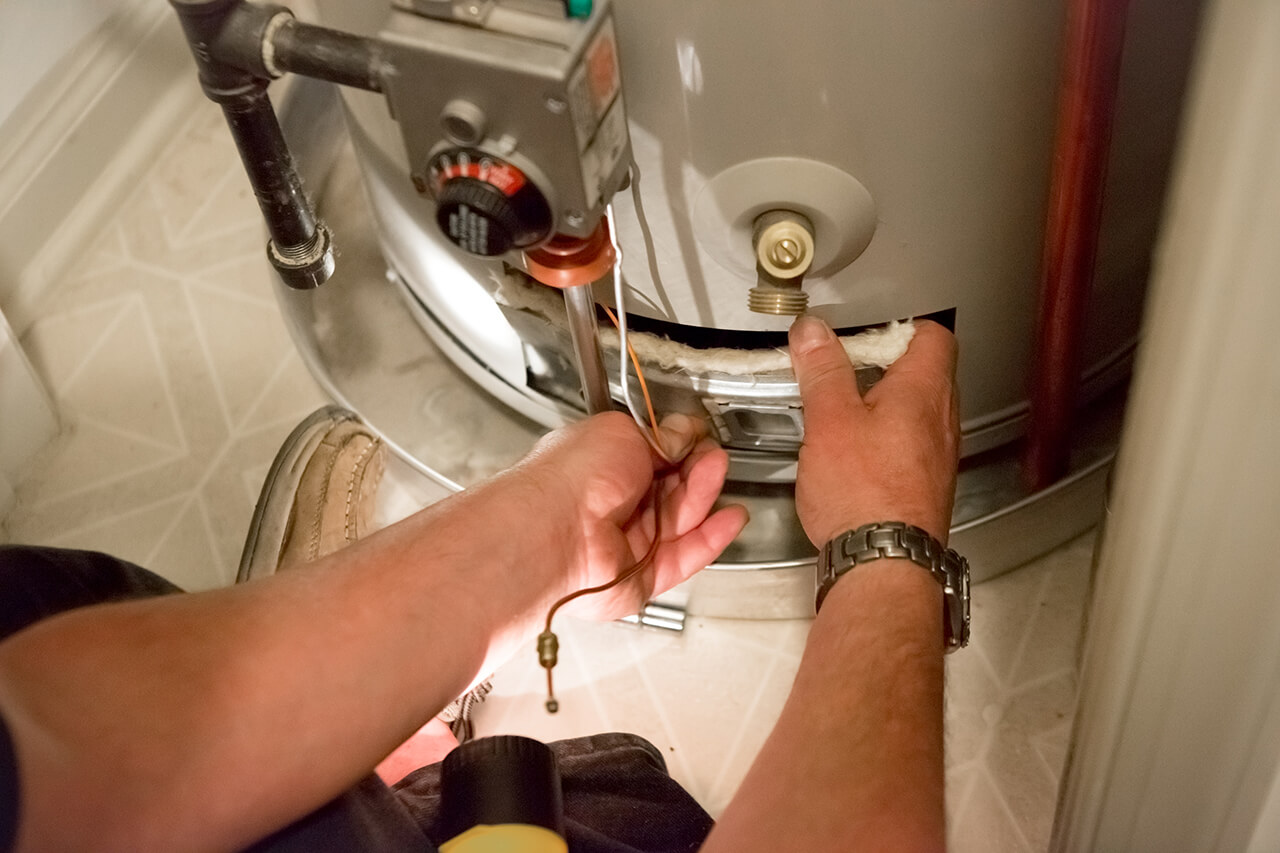
Requires a gas line and a compliant vent path, but generally offers faster recovery and lower operating cost where gas service already reaches the home. See gas water heater repair for how these units are serviced after install.

Elec

Electric tank installation

No gas line or venting needed, just a dedicated electrical circuit, which makes it a practical option in homes without gas service. See electric water heater repair for ongoing service.

Tank

Standard tank capacity

A straightforward, lower-cost installation that stores a set volume of hot water. The right size depends on household demand at peak usage times.

T-less

Tankless installation

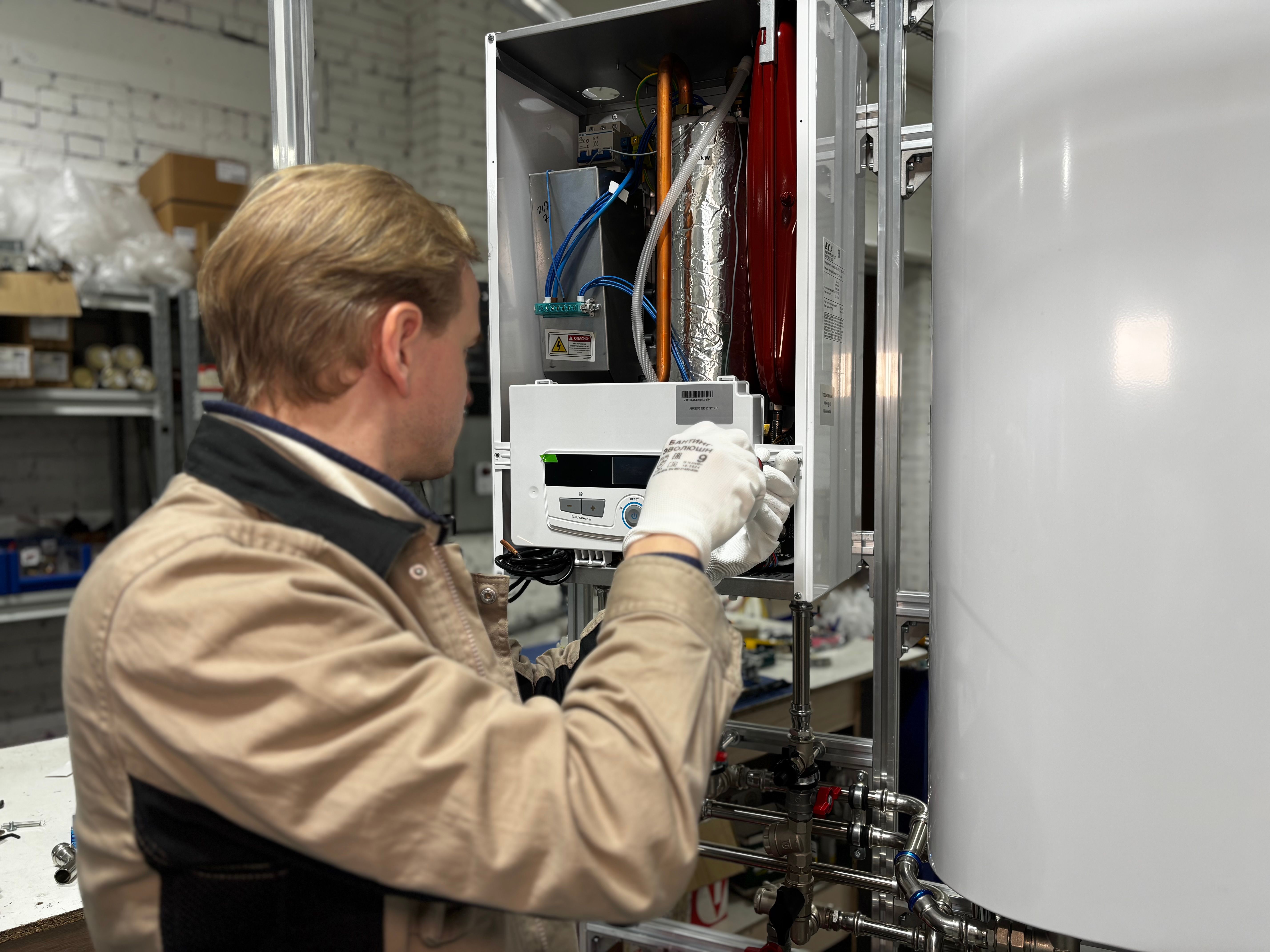
Heats water on demand rather than storing it, which saves floor space and can supply continuous hot water, at the cost of a more involved install. See tankless water heater installation for full detail.

How It Works

Our water heater installation process

A clear path from an empty utility space to a working, code-compliant water heater.

  1. 1

    Call or text us

    Tell us about the space, the project (new build, addition, basement finish, etc.), and your ZIP code. We'll ask a few questions to understand what's needed.

  2. 2

    On-site assessment

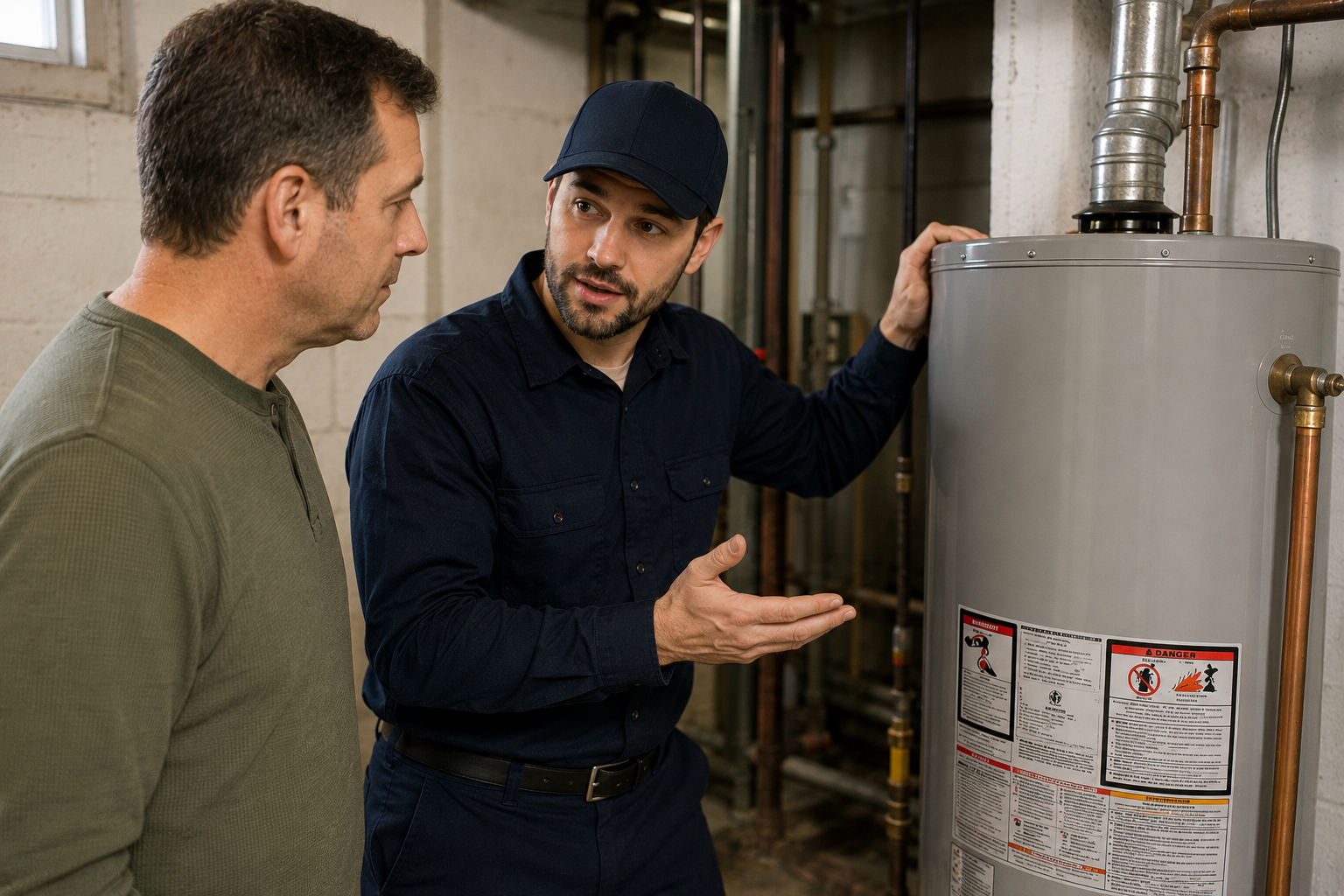
    A technician evaluates the location, available gas or electrical supply, venting options, and water line access, and asks about household size and hot water demand.

  3. 3

    Unit recommendation & written price

    We recommend a unit sized and fueled correctly for your space and provide the full installation cost in writing before any work begins.

  4. 4

    Installation

    We run or connect gas, electrical, and water lines, install proper venting, mount or set the unit, and complete all connections to code.

  5. 5

    Testing & walkthrough

    We test the system, confirm hot water at the tap, set the temperature, and walk you through basic operation and maintenance before we leave.

Worth Knowing

Safety and code compliance in a new installation

A water heater installed incorrectly is a safety issue, not just a performance one. Here's what we make sure is right before we sign off on a job.

Gas installations

Proper gas line sizing, a correctly installed shutoff valve, a leak-tested connection, and a compliant vent path that safely carries combustion byproducts outside the home. Improper venting is one of the most serious risks with a gas unit installation.

Electric installations

A dedicated circuit sized to the unit's draw, proper breaker protection, and correctly grounded wiring. Undersized wiring or a shared circuit can create a fire hazard over time, so this is checked, not assumed.

Temperature & pressure-relief valve

Every installation includes a properly connected temperature and pressure-relief valve with a discharge line routed to a safe location, a required safety feature that prevents dangerous pressure buildup.

Permits & inspection

New gas line work, venting changes, and electrical circuits typically require a permit and inspection under local code. We handle installations to meet that standard rather than cutting corners to save time.

Service Areas

Water heater installation across Greater Cincinnati

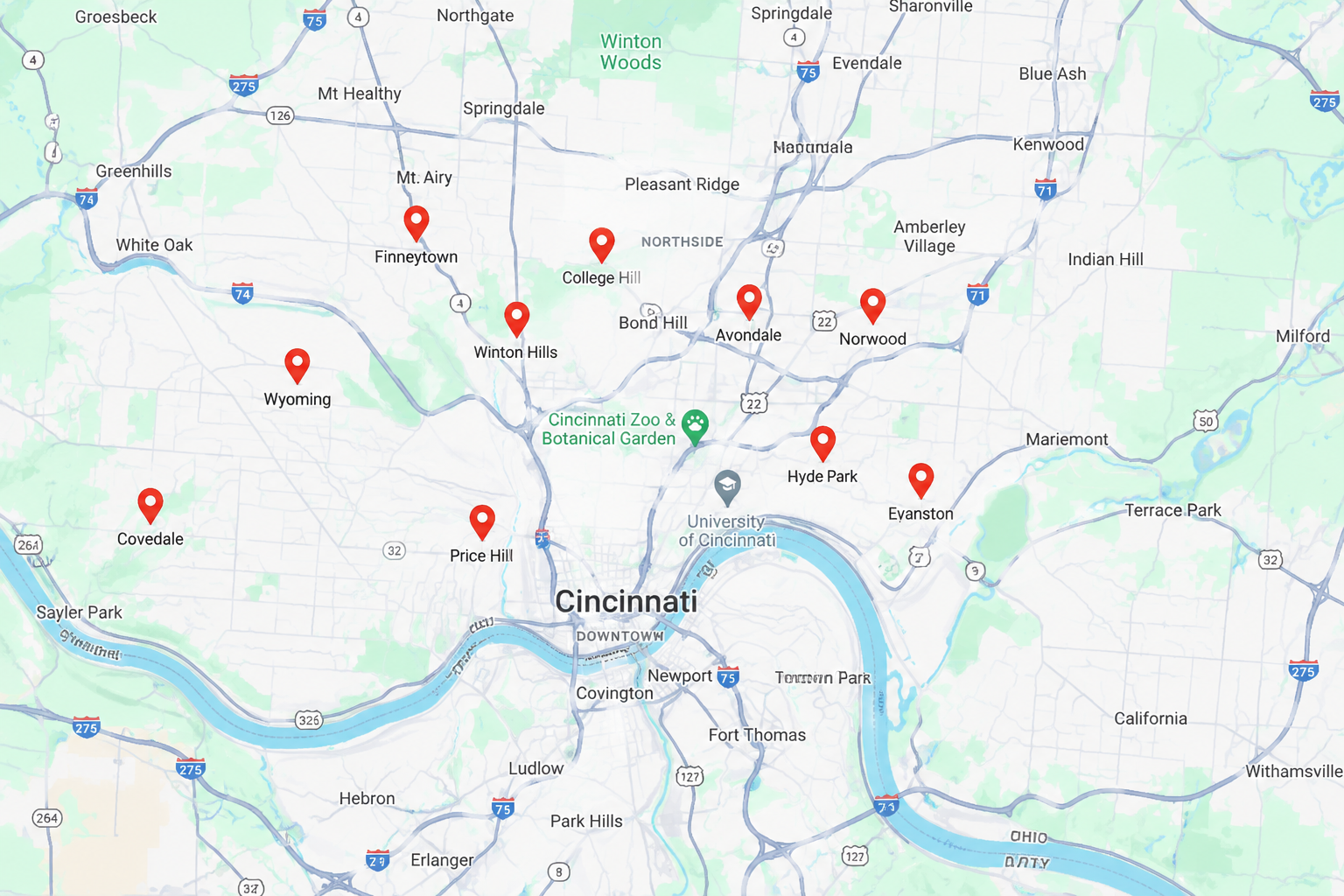
From Hyde Park and Oakley to Mason, West Chester, and across the river into Covington and Newport, new installations get the same sizing guidance and upfront pricing no matter where you're located.

Northern Kentucky

Don't see your neighborhood? We likely still cover it — call to confirm.

Frequently Asked Questions

Water heater installation, answered

Installation typically applies to new construction, a home addition, a finished basement, or a location that has never had a water heater before. If you already have a unit that's failing or aging out, that's usually a replacement rather than a new installation, though the on-site work looks similar.

Sizing depends on the number of people in the household, the number of bathrooms, and how hot water is used at peak times, like back-to-back showers or running a dishwasher and washing machine together. For tankless units, sizing is based on flow rate rather than tank capacity. We walk through this with you before recommending a unit.

It usually comes down to what utilities are already available at the install location. Gas units generally recover hot water faster and cost less to operate where gas service exists. Electric units are simpler to install where there's no gas line nearby but do require adequate electrical capacity. We'll confirm what your space supports before recommending either.

Tankless units are a strong option when space is limited or when a household wants continuous hot water rather than a fixed tank supply. They cost more upfront and often need dedicated venting and adequate gas or electrical capacity. For a straightforward budget install, a tank unit is often simpler. We can walk through both for your specific space.

Most new installations, especially ones involving new gas lines, venting, or electrical circuits, require a permit and inspection under local code. We handle code-compliant installation and can explain what's required for your specific setup.

A standard tank installation where gas, water, and venting connections already exist nearby typically takes a few hours. Installations that require running a new gas line, adding venting, or upgrading electrical capacity take longer, and we'll walk you through the expected timeline before starting.

New construction installation includes setting the unit, running or connecting gas or electrical supply, installing proper venting, connecting water lines, setting the temperature and pressure-relief valve, and testing the full system before it's signed off. It's coordinated with the rest of the build so everything meets code from day one.

In many cases, yes, though space constraints often point toward a tankless unit or a compact tank model. We assess clearances, venting options, and access before recommending equipment so the installation fits the space safely.

Yes. We install residential gas, electric, and tankless units, as well as commercial and multi-tank systems for apartment buildings, restaurants, and small businesses.

Yes. We stand behind our installation labor, and manufacturer warranties apply to the unit itself. Exact terms are confirmed in writing before installation begins.

Get a Free Estimate

Tell us about your project. We'll follow up right away.

No obligation, no pressure. Whether it's a new build, an addition, or a basement finish, we'll help you figure out the right unit and a written price before anything is installed.

  • We respond during business hours as quickly as we can
  • Estimates are free and come with no commitment
  • Serving Cincinnati and the surrounding communities
(513) 810-5367

By submitting, you agree to be contacted about your request. We don't sell your information.