(513) 810-5367

Tank-to-Tankless Conversion — Cincinnati, OH

Tankless Water Heater Installation in Cincinnati, OH

Trading a bulky tank for continuous hot water and freed-up utility space means more than swapping units. Tankless installation covers gas line sizing, venting, and electrical work, done to code, with a written price before anything is disconnected.

  • Same-Day Service Available
  • Honest, Upfront Pricing
  • Serving Cincinnati & Northern Kentucky
Professional Service
Same-Day Service
Gas • Electric • Tankless
Residential & Commercial
Emergency Service
Upfront Pricing

Is It the Right Fit?

Signs tankless installation makes sense for your home

These are the situations that usually point toward a tankless conversion. Tap one to see why it matters.

The household regularly runs out of hot water

Why it matters: A tank has a fixed supply that runs out once drained, no matter how efficient it is. A properly sized tankless unit heats water on demand, so back-to-back showers and running appliances aren't competing for a finite tank.

Our take: This is one of the most common reasons households switch, especially as more people move into a home than the original tank was sized for.

Your utility space is tight

Why it matters: A tankless unit mounts to a wall and takes up a fraction of the footprint of a standard tank, which can free up real space in a small basement, closet, or utility room.

Our take: We'll walk the space with you to confirm a wall-mounted tankless unit actually fits your layout, venting route, and clearance requirements before recommending it.

Your old tank needs replacing anyway

Why it matters: If a tank is already past its useful life or failing, that's a natural point to evaluate tankless instead of simply replacing it with another tank. See our replacement page for the full comparison between the two paths.

Our take: We'll show you both options side by side, tank replacement and tankless conversion, so the decision is based on your household, not just what's easiest to install.

You want to cut down on standby energy loss

Why it matters: A tank heats and reheats water constantly to keep it ready, even when no one's using it. A tankless unit only fires when hot water is actually called for, which can reduce energy use over the life of the unit.

Our take: The energy savings build up over years rather than showing up immediately, so this matters most if you're planning to stay in the home long-term.

You're planning a remodel or addition

Why it matters: A remodel or addition is often the easiest time to run new gas line, venting, or electrical work, since walls and utility spaces may already be open.

Our take: If you're already planning construction, it's worth coordinating tankless installation with that timeline rather than doing the infrastructure work twice.
How It Works

Our tankless installation process

A clear path from an aging tank or an empty utility spot to a working tankless system.

  1. 1

    Call or text us

    Tell us what you're working with now, tank, no unit at all, or a failing tankless system, and your ZIP code. We'll ask about your household's hot water use.

  2. 2

    On-site assessment

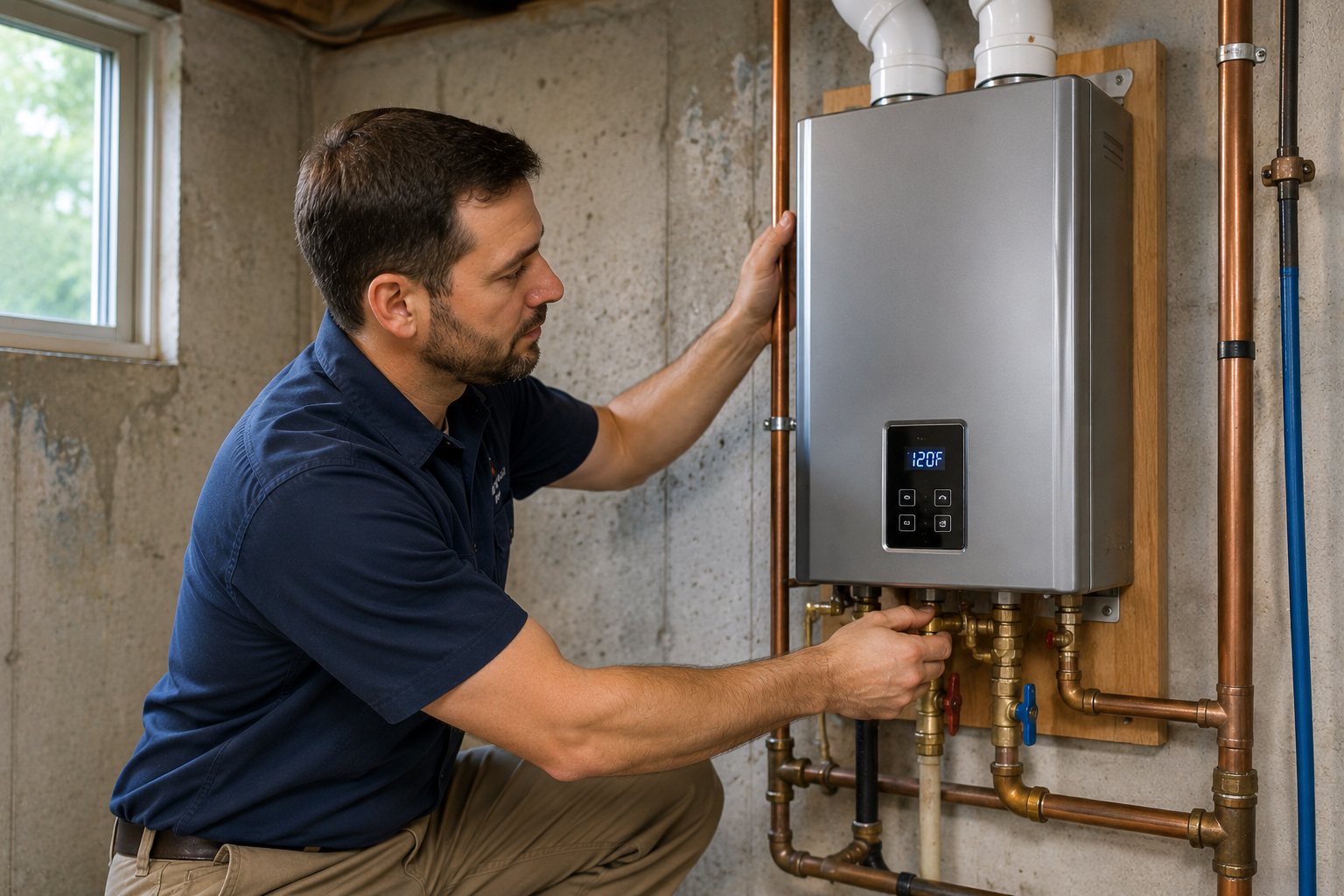
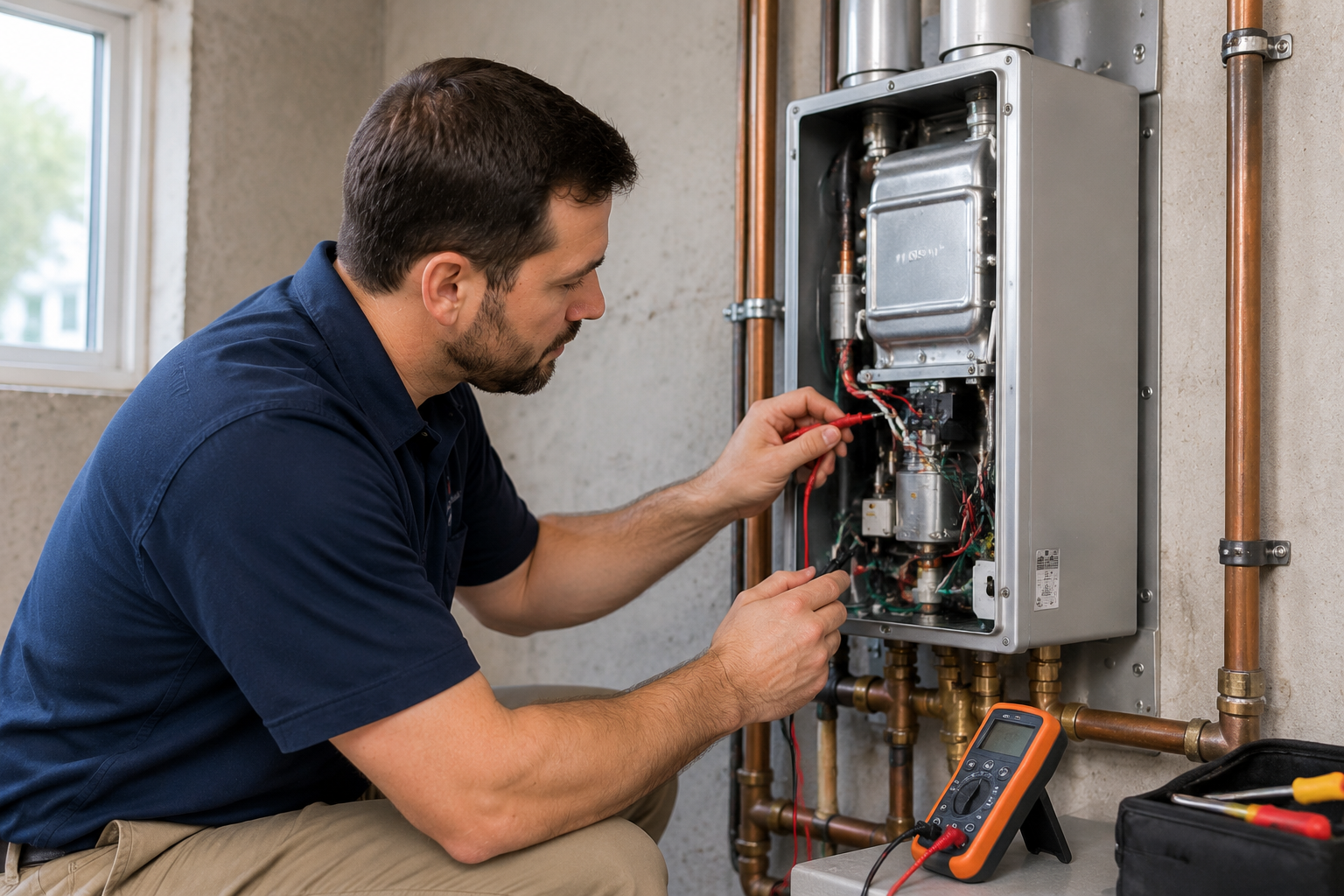
    A technician checks your existing gas line, venting path, and electrical service against what the new tankless unit will require.

  3. 3

    A real price, before we start

    You'll see the full installation cost in writing, including any gas line, venting, or electrical work, before anything is disconnected.

  4. 4

    Installation and connections

    The old unit is removed if applicable, and the tankless unit is mounted and connected with correct venting, gas or electrical supply, to code.

  5. 5

    Test and walkthrough

    We test the unit under real demand, confirm hot water at the tap, and walk you through anything specific to operating a tankless system.

Worth Knowing

Gas vs. electric tankless

Both are valid tankless options, but they fit different homes and needs.

Gas tankless usually makes sense when

Your home already has, or can support, a gas line sized for higher-demand appliances, and you want a unit capable of supplying multiple fixtures at once. Gas tankless units generally handle whole-house demand better than electric models, but they need proper venting rated for the unit.

Electric tankless is worth considering when

Gas service isn't available or practical to extend, or you need a unit for a smaller point-of-use application, like a single bathroom or an addition. Electric tankless units skip the venting requirement but may need dedicated electrical circuits depending on capacity, which we confirm during the assessment.

Why Homeowners Choose Us

Built around getting the infrastructure right

A tankless conversion is only as good as the gas line, venting, and connections behind it. Here's what that means in practice.

01

Upfront, honest pricing

You approve a full price for the conversion, including gas line, venting, or electrical work, before anything is disconnected.

02

Correct sizing, not guesswork

We size the unit to your household's actual hot water demand, not a default model picked to keep the job simple.

03

Code-compliant installation

Gas line, venting, and electrical connections are installed to manufacturer and local code, inspected and confirmed.

04

Old unit hauled away

If you're converting from a tank, the old unit leaves with us. No separate disposal to figure out on your own.

Related Services

Not sure a full tankless conversion is the right call?

Here's where to go if your situation looks a little different than a new tankless installation.

Service Areas

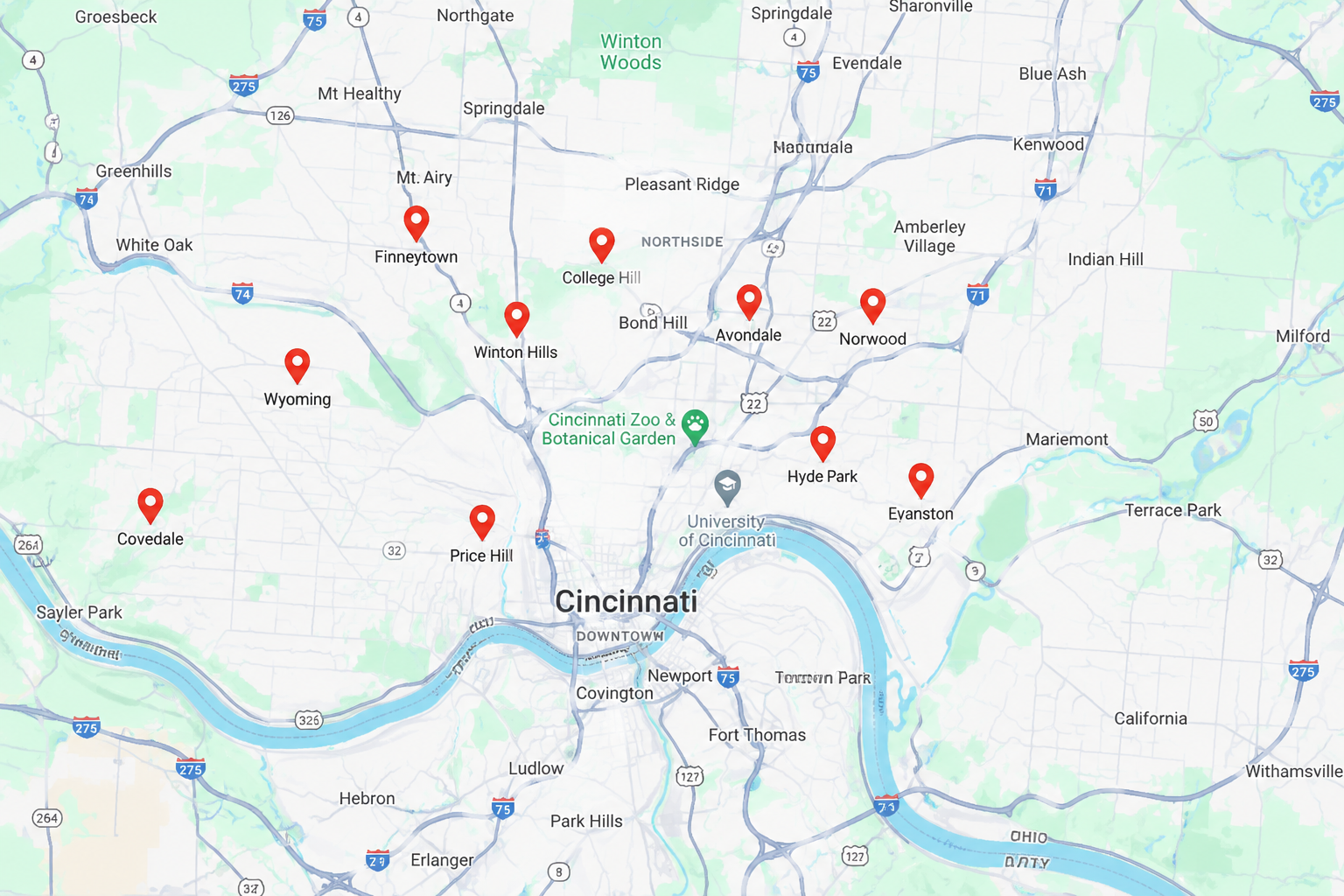
Tankless water heater installation across Greater Cincinnati

From Hyde Park and Oakley to Mason, West Chester, and across the river into Covington and Newport, tankless conversions get the same upfront pricing and code-compliant work no matter where you're located.

Northern Kentucky

Don't see your neighborhood? We likely still cover it — call to confirm.

Frequently Asked Questions

Tankless water heater installation, answered

Cost depends on the unit's capacity, whether it's gas or electric, and how much venting, gas line, or electrical work your home needs to support it. A simple like-for-like tankless swap costs less than a full tank-to-tankless conversion in a home with no existing tankless infrastructure. We confirm the full price in writing after seeing your setup.

It depends on your household. Tankless units cost more to install than a comparable tank, but they take up less space, can supply continuous hot water, and cut down on standby energy loss over the unit's life. They tend to pay off most for households that regularly run out of hot water or are short on utility space.

A tank-to-tankless conversion typically involves removing the old tank, upgrading or resizing the gas line to meet the tankless unit's higher demand, installing new venting rated for the unit, and sometimes electrical work for ignition and controls. We assess all of this on-site before quoting the job.

A straightforward tankless-to-tankless swap can often be done in a few hours. A full tank-to-tankless conversion that needs new venting, a larger gas line, or electrical work usually takes longer and is often scheduled as a half-day or full-day job.

Often, yes. Tankless units heat water on demand and typically require more gas flow than a standard tank, which can mean upsizing the gas line from the meter or a nearby branch. We check your home's existing gas supply as part of the assessment before installation.

A properly sized tankless unit can supply continuous hot water as long as demand stays within its rated flow rate. Running several high-demand fixtures at once, like two showers and a washing machine, can still stretch a unit's capacity, which is why correct sizing for your household matters.

Sometimes, but not always. Tankless units mount differently and need specific clearances, venting routes, and often a nearby gas or electrical connection point. In many homes it makes more sense to relocate the unit to a wall-mounted spot rather than force it into the old tank's footprint.

Yes. We install gas tankless units, which typically handle higher hot water demand, and electric tankless units, which can be a good fit for smaller households or point-of-use applications. We'll help you weigh which fits your home and gas or electrical service.

Yes. We stand behind our installation labor, and manufacturer warranties apply to the unit itself. Exact terms are confirmed in writing before installation, so you know what's covered and for how long.

Get a Free Estimate

Tell us about your home. We'll follow up right away.

No obligation, no pressure. If your current unit has an active leak or you have no hot water right now, skip the form and call — our emergency repair service gets you seen faster.

  • We respond during business hours as quickly as we can
  • Estimates are free and come with no commitment
  • Serving Cincinnati and the surrounding communities
(513) 810-5367

By submitting, you agree to be contacted about your request. We don't sell your information.