Draining and flushing the tank
What we do: We drain the tank fully and flush out the sediment that settles at the bottom over time, particularly common in areas with harder water.
Why it matters: Sediment insulates the bottom of the tank from the heat source, making the unit work harder and driving up energy use. Left long enough, it also causes the popping or rumbling noises many homeowners notice.
Inspecting the anode rod
What we do: We remove and inspect the sacrificial anode rod for how much of it has corroded away, and replace it if it's significantly worn down.
Why it matters: The anode rod protects the steel tank from rusting by corroding in its place. Once it's spent, the tank itself starts to corrode, which is one of the most common reasons tank units fail before they should.
Testing the pressure-relief valve
What we do: We test the temperature and pressure relief valve to confirm it opens and reseats correctly, since this is a core safety component.
Why it matters: This valve exists to release pressure if the tank overheats. A valve that's stuck or corroded won't do its job when it's actually needed, so it's not something to skip checking.
Checking temperature settings and thermostats
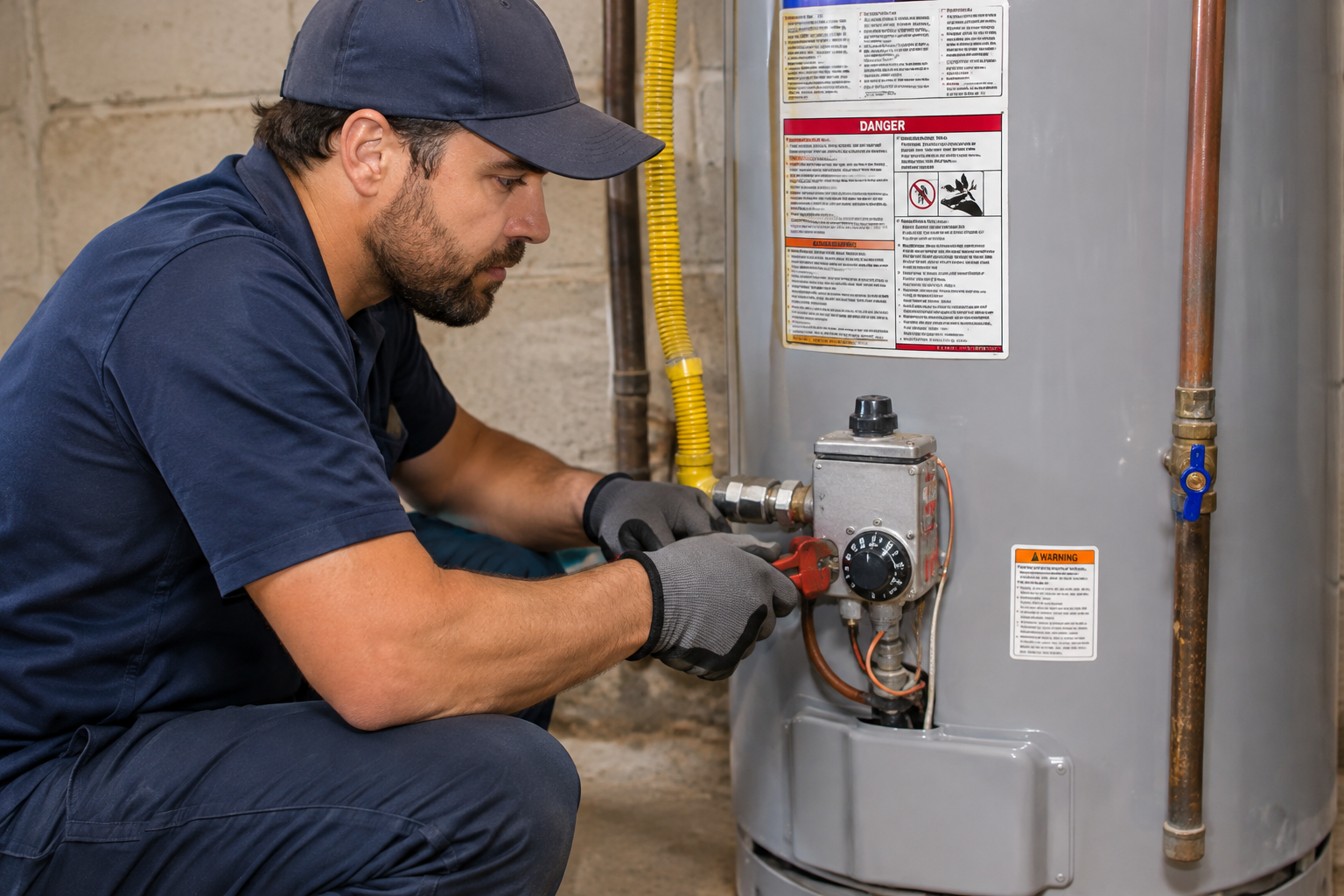
What we do: We confirm the thermostat is holding an appropriate, safe temperature and isn't running hotter or cooler than it should.
Why it matters: A unit set too hot wastes energy and increases scald risk; one set too low can allow bacteria growth in the tank over time. Getting this right balances safety and efficiency.
Inspecting venting, connections, and the surrounding area
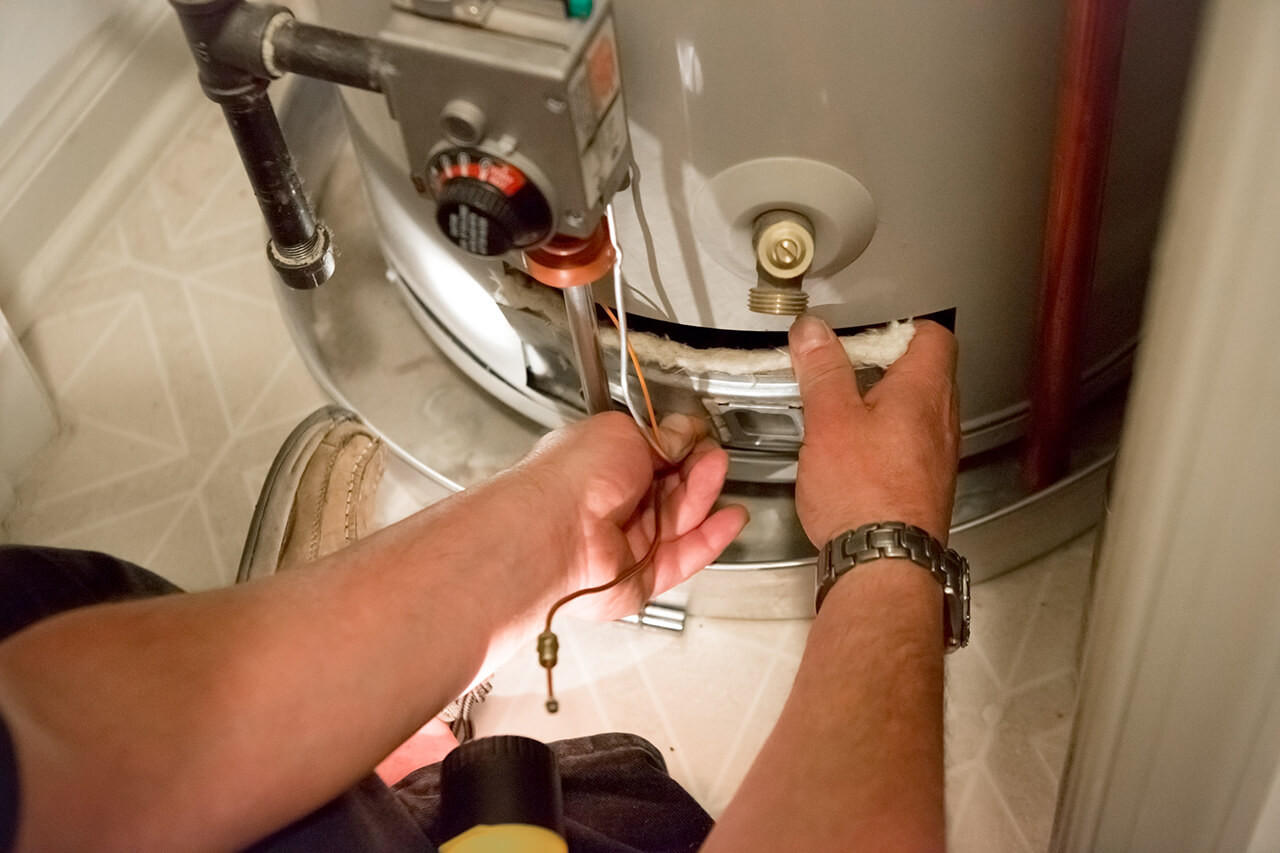
What we do: We check gas or electrical connections, venting on gas units, and look for any early signs of corrosion, moisture, or wear around fittings.
Why it matters: Small issues here, like a loosening fitting or early corrosion, are far easier and cheaper to address before they turn into a leak or an emergency call. See emergency water heater repair for what tends to happen when they're missed.