(513) 810-5367

Emergency Safety Guide

Emergency Water Heater Shut-Off Guide

A leaking tank or a gas smell doesn't wait for a technician to arrive. Here's exactly how to shut off the water, gas, and power to your water heater, step by step, so you can protect your home in the minutes before help gets there.

  • 24/7 Emergency Response
  • Honest, Upfront Pricing
  • Serving Cincinnati & Northern Kentucky
Professional Service
Same-Day Service
Gas • Electric • Tankless
Residential & Commercial
Emergency Service
Upfront Pricing

Step One, Always

How to shut off the water supply

This is the first step in almost every emergency, whether the unit is gas or electric, because it stops a leak from getting worse right away.

1. Find the cold water inlet valve

Look at the top of the water heater tank. There are typically two pipes coming out of the top: one is the cold water inlet, feeding water into the tank, and the other is the hot water outlet, sending heated water to the rest of the house. The shutoff valve is on the cold water inlet side, usually just above where the pipe meets the tank.

2. Close the valve

Most water heaters use one of two valve types. A round handle valve closes by turning it clockwise until it stops. A lever-style ball valve closes with a quarter turn, so the handle sits perpendicular to the pipe rather than in line with it. Either way, you're looking for the point where it stops turning easily, not forcing it further.

3. Can't find it or it won't budge? Use the main shutoff

Older valves can seize up from mineral buildup, or you might not be able to locate a dedicated valve at the unit at all. In that case, your home's main water shutoff valve, usually located where the main line enters the house, near the water meter, or in a basement or crawlspace, will stop water to the entire home, including the water heater. It's worth locating this valve now, before an emergency, so you're not searching for it under pressure.

4. Expect hot water to stop

Once the cold supply is shut off, the tank can't refill, so hot water taps throughout the home will run cold or stop delivering water fairly quickly. That's expected and not a sign anything else has gone wrong. It stays that way until the unit is repaired or replaced and the water supply is restored.
For Gas Water Heaters

How to shut off the gas supply

If you smell gas near the unit, this takes priority over everything except leaving the area if the smell is strong. If there's no gas smell and this is purely a water leak, water shutoff alone is usually sufficient and you don't need to touch the gas line.

01

Locate the gas shutoff valve

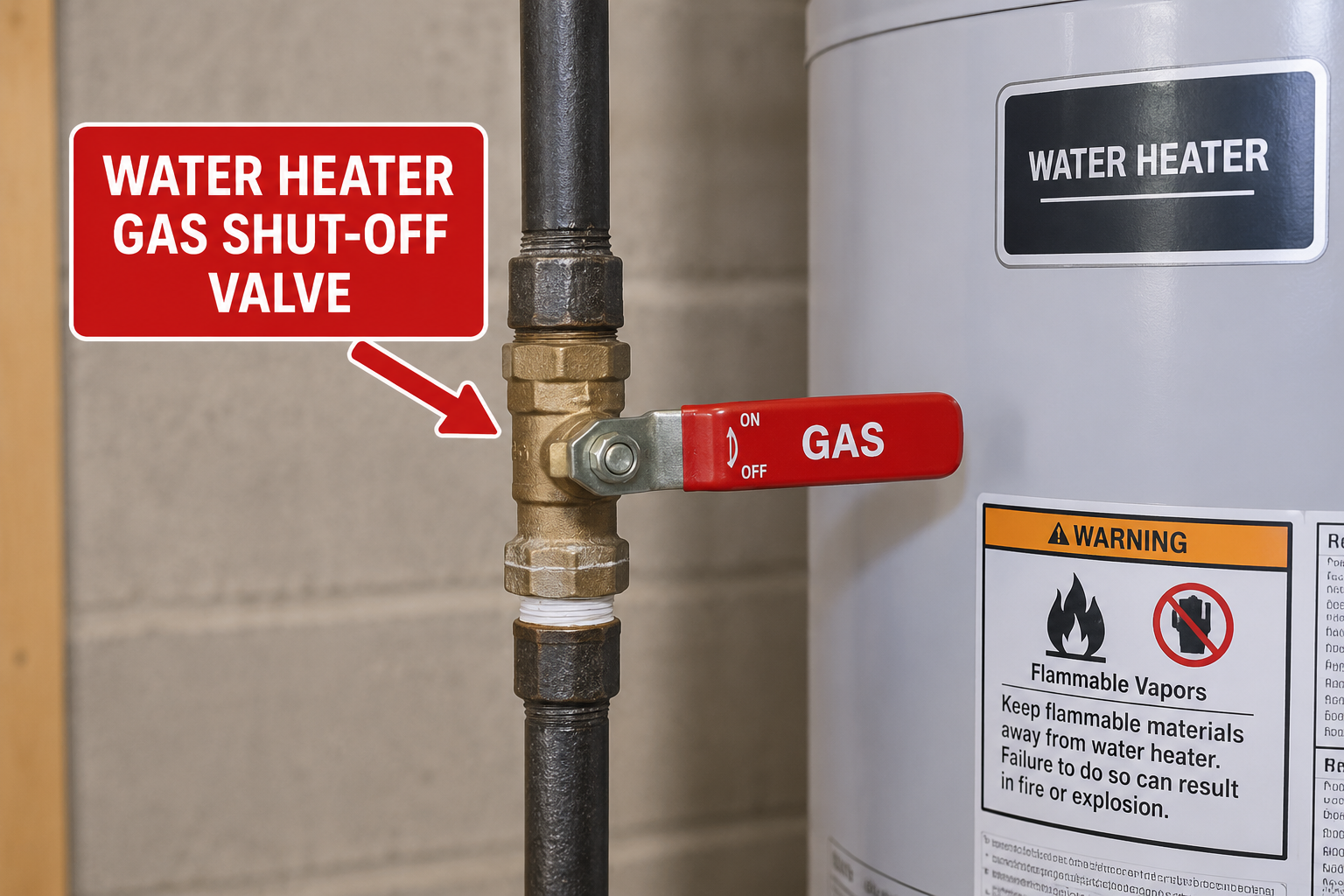
It's on the gas line feeding the unit, usually a lever-style valve a foot or two before the line connects to the water heater's gas control.

02

Turn it a quarter turn

The valve is closed when the lever sits perpendicular (crosswise) to the pipe, and open when it's parallel. If you smell gas, only do this if you can reach it without flipping switches or striking anything nearby.

03

Don't operate anything electrical nearby

Avoid light switches, garage door openers, or anything that could spark in the immediate area if the gas smell is present. Leave doors open on your way out to help ventilate instead.

04

Leave and call for help

Once you're safely away from the area, call for emergency service. A gas smell is the one situation on this page where getting out and calling is more important than finishing every step yourself.

For Electric Water Heaters

How to shut off the power

This matters most if there's an active leak, since water and live electrical components are a genuine hazard together.

1. Go to your electrical panel

Find your home's breaker panel, usually in a basement, garage, or utility closet. Electric water heaters typically run on a dedicated double-pole (240-volt) breaker rather than sharing a circuit with other appliances.

2. Identify the correct breaker

If your panel is labeled, look for "water heater" specifically. If it isn't labeled clearly, or you're not confident which breaker it is, switching off the main breaker for the whole panel is a safe fallback until a technician can confirm the right one for you.

3. Flip it to off, from a dry spot

Approach the panel from dry ground, not standing in any water that may have already spread from the leak. Switch the breaker fully to the off position.

4. Avoid the unit itself until power is confirmed off

Don't touch the water heater or stand in nearby standing water until you've cut power at the breaker. Once power is off, you can safely proceed to the water shutoff step if you haven't already.

When to Call a Professional

What a technician handles from here

Shutoff steps stop the immediate problem. Diagnosing and fixing the actual cause is where a technician takes over.

  1. 1

    Confirming the source

    We identify whether the leak came from a fitting, a valve, or the tank itself, which determines whether it's a repair or a replacement.

  2. 2

    Checking gas and electrical safety

    On gas units, we verify there's no ongoing leak in the line itself before anything is turned back on.

  3. 3

    Giving you a real price before touching anything

    You'll see repair or replacement costs in writing before any work begins.

  4. 4

    Restoring hot water safely

    Once repaired or replaced, we test the system fully before turning the water, gas, or power back on for good.

Frequently Asked Questions

Common questions about shutting off a water heater

Shut off the cold water supply valve at the top of the tank first, since that stops new water from entering and making the leak worse. Only after that would you consider shutting off gas or power, depending on the unit type.

It's typically a valve on the cold water inlet pipe at the top of the tank, often a round handle you turn clockwise or a lever-style ball valve you turn a quarter turn to close. If you can't find one directly at the unit, the home's main water shut-off valve will also stop the flow.

If you can reach the gas shutoff valve safely and without striking anything that could create a spark, turning it to the closed position is reasonable. Avoid operating light switches or anything electrical in the area, ventilate if you can do so safely, leave the area, and call for emergency service right away.

Find the double-pole breaker labeled for the water heater in your electrical panel and switch it to the off position. If the panel isn't labeled clearly, shutting off the main breaker is a safe fallback until you can confirm which breaker controls the unit.

Avoid touching the unit or standing in any water near it until the power has been shut off at the breaker. Water and electricity together are a genuine hazard, so cutting power first, from a dry location if possible, is the safer order of operations.

If the valve at the unit is stuck, corroded, or you simply can't locate it in time, shutting off your home's main water supply valve will stop the leak just as effectively. It's worth knowing where that main valve is before an emergency happens.

No. Once the cold water supply to the tank is shut off, the unit can no longer refill, and you should expect hot water taps in the home to run cold or stop entirely until the unit is repaired or replaced.

Not necessarily, and in some leak situations draining it yourself can make a mess or complicate the repair. Shutting off the water and, if relevant, the gas or power is usually enough until a technician arrives to assess the actual cause.

A gas smell, an active leak, or water pooling around the unit should be treated as an emergency. A pilot light that's out with no gas odor, or a temperature issue with no water on the floor, can usually wait for a scheduled visit instead.

In most cases we can get to active leaks, gas smells, and total loss of hot water the same day. Call or text us once things are shut off and we'll let you know how soon we can get a technician to you.

Get Emergency Help

Already shut things off? Let's get someone out to you.

If it's an active leak, a gas smell, or you have no hot water right now, skip the form and call — our emergency repair service gets you seen faster.

  • We respond during business hours as quickly as we can
  • Estimates are free and come with no commitment
  • Serving Cincinnati and Northern Kentucky
(513) 810-5367

By submitting, you agree to be contacted about your request. We don't sell your information.