1. A loose or leaking drain valve
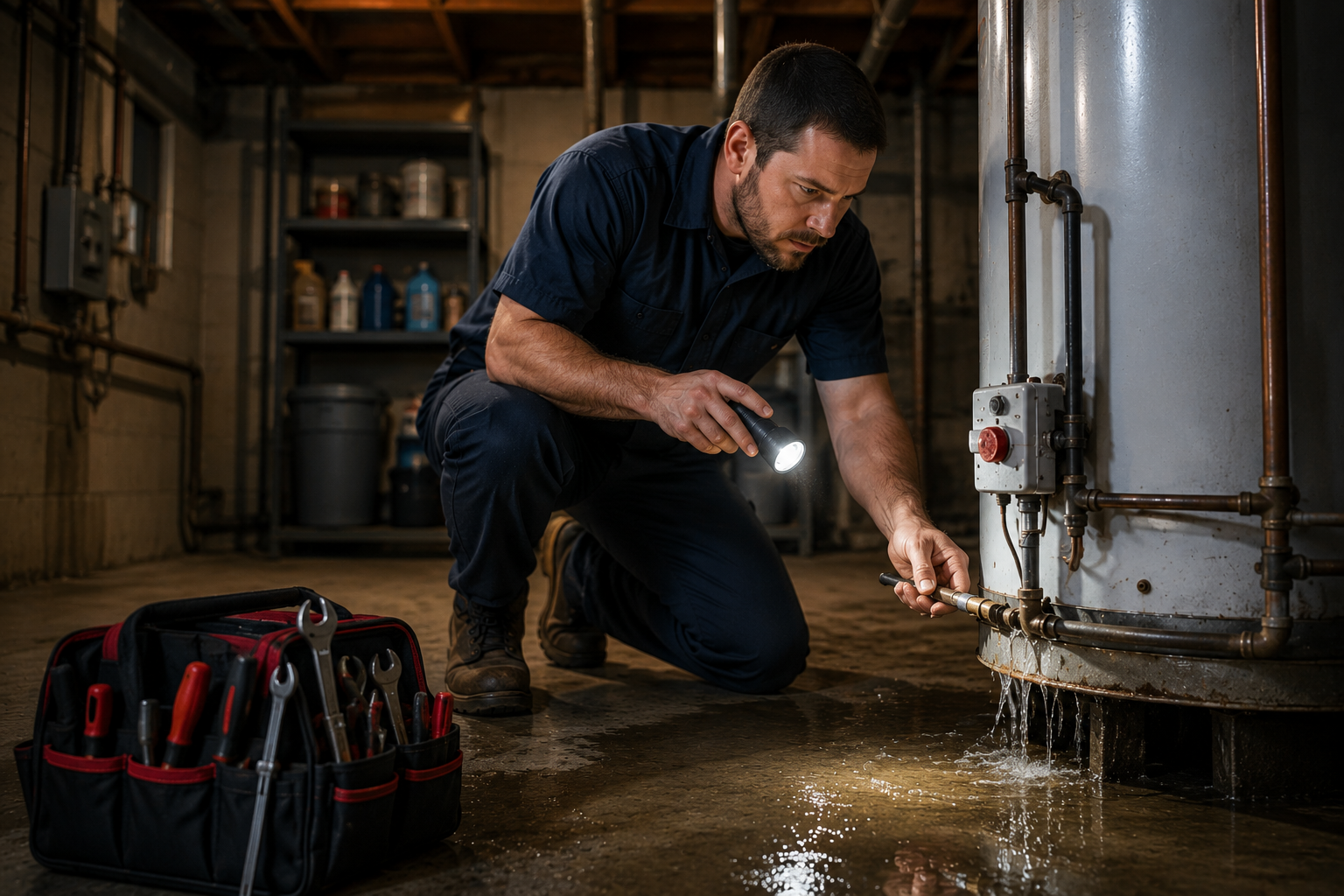
The drain valve sits near the bottom of the tank and is used to flush sediment out during maintenance. Over time, the valve itself can loosen slightly, develop a worn washer, or fail to seat properly, letting water seep out slowly around it. This is one of the easiest bottom leaks to identify: the water tends to originate right at the valve rather than spreading from underneath the tank, and it's usually a straightforward repair or valve replacement rather than anything involving the tank itself.
2. A dripping pressure-relief valve
The pressure-relief valve, usually located on the side or top of the tank with a discharge pipe running down toward the floor, is a safety device that releases water if pressure or temperature inside the tank climbs too high. Some occasional dripping can be normal, especially after the water heater has been working hard. Frequent or continuous dripping is different, and usually means the valve itself has worn out or that something else in the system, like excess pressure from a home's water supply, is causing it to open more than it should. Either way, it's worth having tested rather than left alone.
3. Loose fittings or connections
The cold water inlet and hot water outlet connections at the top of the tank, along with any nearby unions or fittings, can loosen slightly over time from vibration, thermal expansion, or age. A leak here can sometimes travel down the outside of the tank and pool at the base, which makes it look like the tank itself is leaking even though the actual source is higher up. Drying the tank completely and watching where water reappears first is the best way to catch this.
4. Condensation, not an actual leak
On some units, particularly during humid weather or right after the tank is refilled with cold water, condensation can form on the tank or the cold water inlet pipe and drip down to the floor. This tends to look like a light film of moisture rather than a growing puddle, and it often clears up once the unit has been running for a while. If you're not confident it's condensation, it's still worth having checked, since a real leak and condensation can look similar from a distance.
5. A cracked or corroded tank
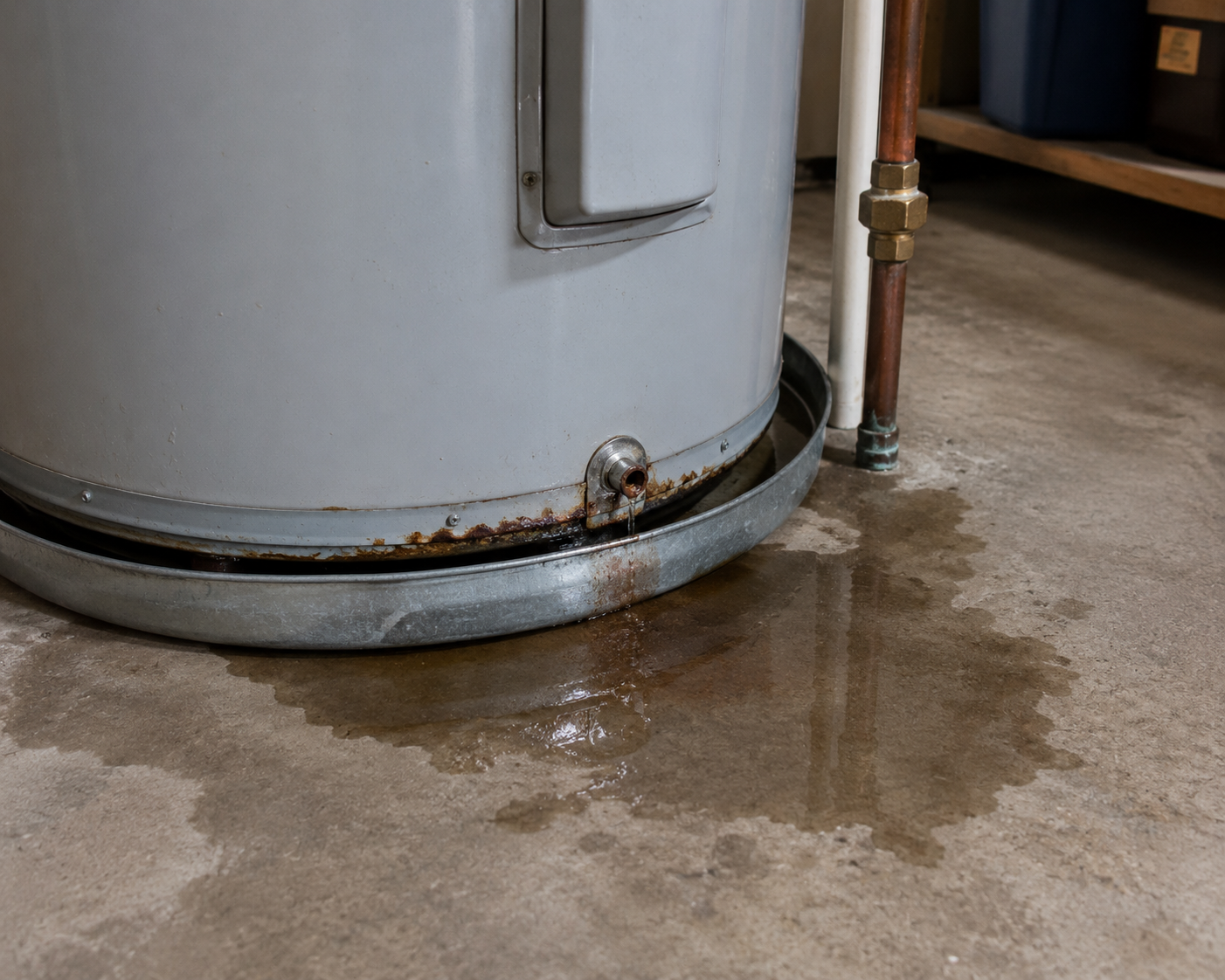
This is the source that actually means the water heater needs replacing. Tank water heaters are built with a steel shell, and once that shell corrodes through, usually after the anode rod has been depleted for a long stretch of time, water begins to seep or drip from the tank itself. This kind of leak doesn't stay the same size. It tends to worsen over days or weeks as the corrosion continues, and no repair can seal a compromised tank permanently. If drying and tightening every fitting doesn't stop the water, or the leak returns even after service, the tank itself is the likely cause.
6. An overflowing or clogged overflow pipe
On some installations, particularly ones with a drain pan or overflow pipe beneath the unit, water can appear at the base because the pan itself is overflowing, often due to a clog in the drain line rather than a leak from the water heater at all. This is worth ruling out, especially in a finished basement or a unit installed in an attic or upper-floor closet with a pan underneath it.