01
Upfront cost
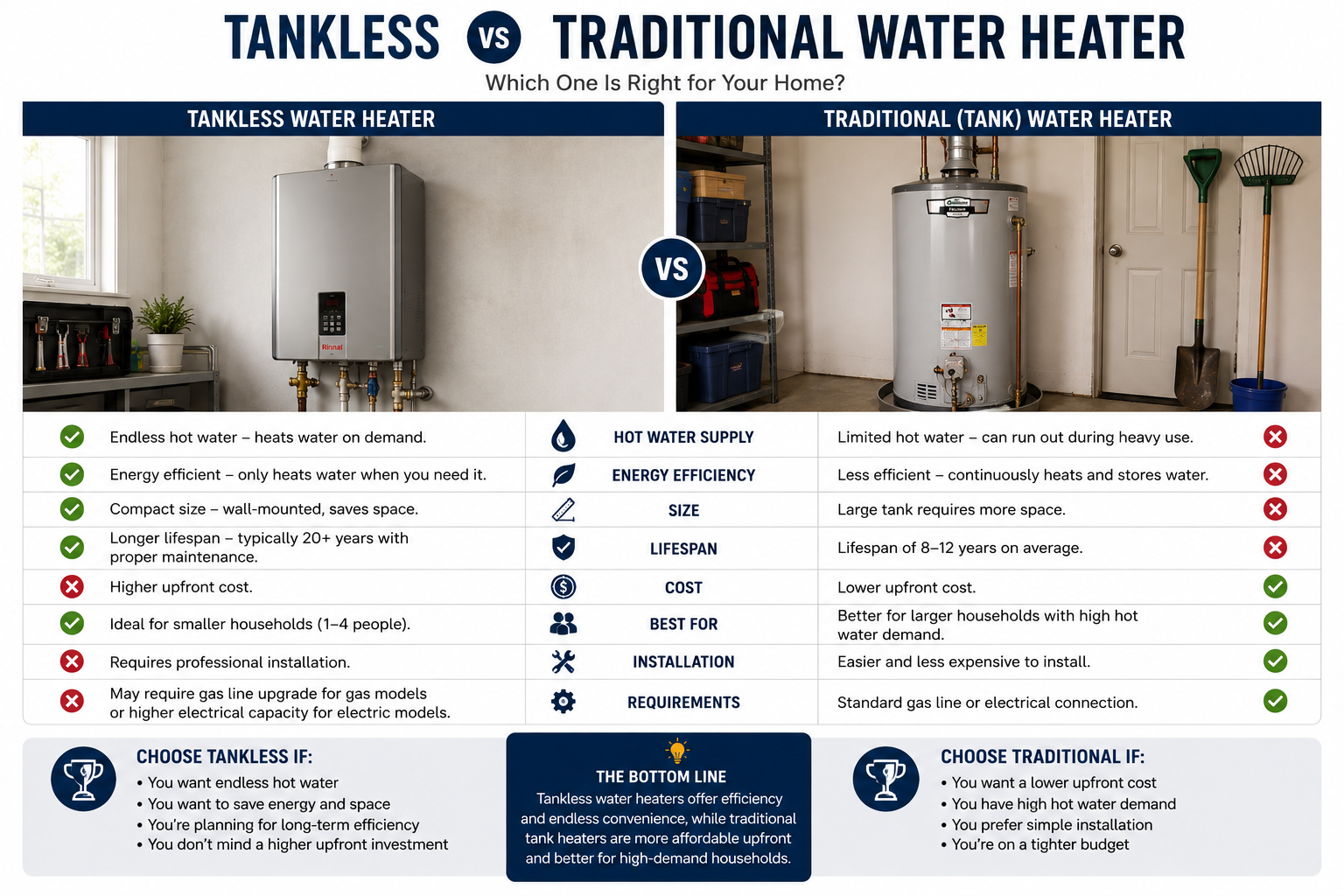
A tank replacement is generally the lower-cost option, especially for a like-for-like swap with no changes to venting or gas line capacity. A tankless conversion typically costs more upfront, particularly if new venting or an upgraded gas or electrical supply is needed to support the unit.
02
Energy efficiency
Tankless units generally use less energy over time because they don't keep a full tank of water hot when nobody's using it. The size of that savings depends on household hot water habits, and homes with frequent, spread-out use tend to see less of a relative benefit than homes with more intermittent use.
03
Hot water supply
A tank has a fixed capacity and can run out during heavy simultaneous use. A properly sized tankless unit avoids running out entirely, since it heats water as it flows rather than drawing from storage, though it can be limited if too many fixtures demand hot water at once.
04
Space
A standard tank sits on the floor and needs clearance on all sides, typically taking up a few square feet of utility space. A tankless unit mounts on a wall and has a much smaller footprint, which matters most in a tight utility closet or a basement being converted into living space.
05
Lifespan
A tank unit typically lasts around 8 to 12 years before internal corrosion or component wear becomes a bigger issue. A tankless unit, with proper maintenance, often lasts closer to 15 to 20 years, since there's no tank interior to corrode over time.
06
Maintenance
Tank units need an annual flush to clear sediment and a periodic anode rod check. Tankless units need periodic descaling to keep mineral buildup off the heat exchanger, especially in areas with harder water. Neither type is maintenance-free, but the specific task differs. See our water heater maintenance page for what each involves.